
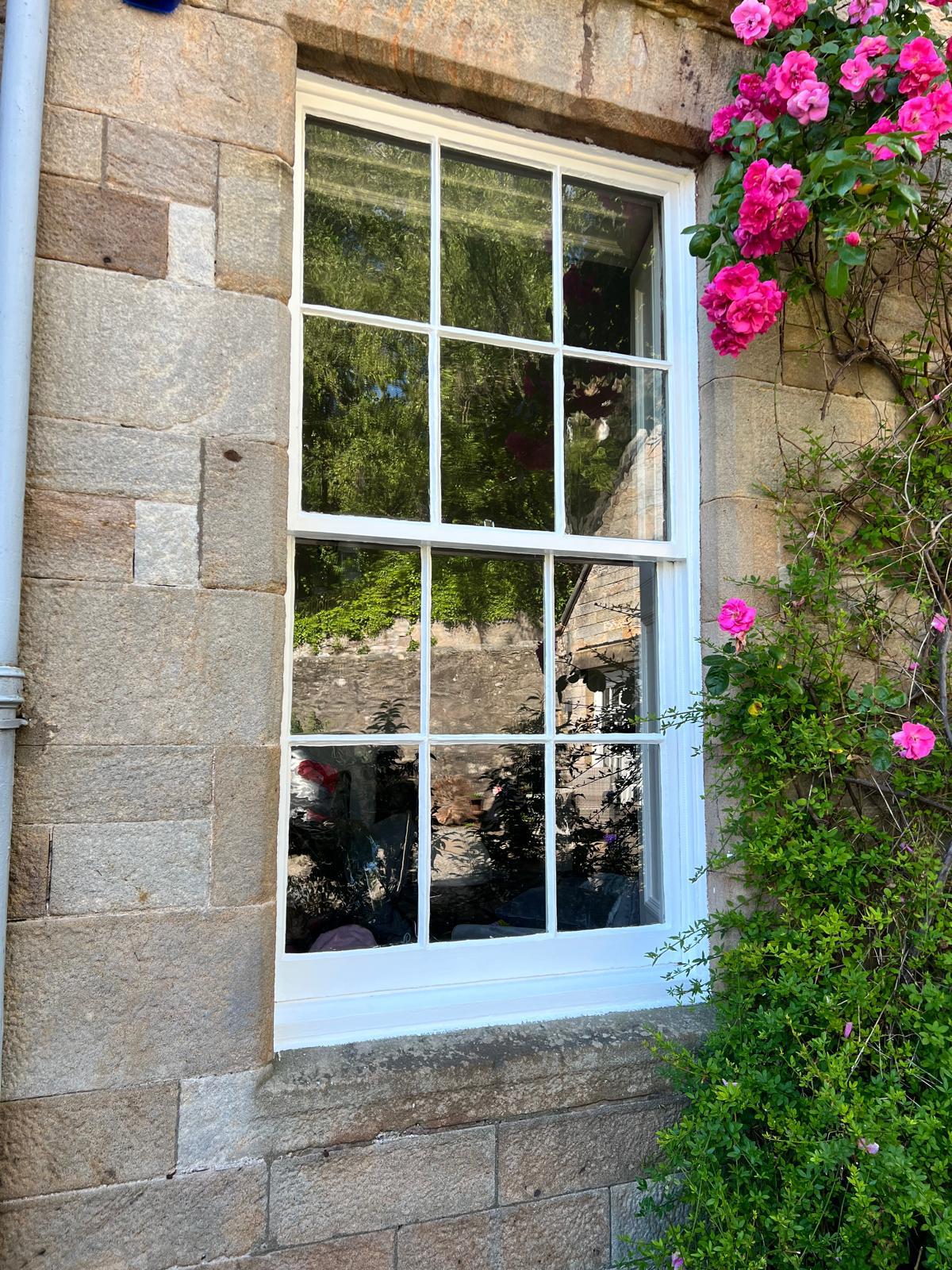
Your project in Bridge of Allan
Respect the original. Improve the everyday.
Traditional sash and case windows contribute to the character of Bridge of Allan homes. We assess the timber, movement and existing details before recommending a programme of repairs and refurbishment.
Planning connected work? Explore our targeted repairs and secondary glazing services so the details can be considered together.
A repair-led assessment
We examine the sashes, case, joints and operating components to understand where deterioration has occurred. Sound original material can often remain part of the finished window.
A coordinated programme of work
Restoration can combine timber repairs and attention to the moving components. Draught reduction and secondary glazing can be discussed alongside the repair work where appropriate.
How do I know whether restoration is suitable?
Photographs are a useful starting point, but an inspection is normally needed to assess timber condition and the work required.
Discuss your project in Bridge of Allan
Tell us about the work, your property location and any access considerations. Photographs and approximate measurements can help us understand the project before arranging a visit. We serve Bridge of Allan, Dunblane, Causewayhead and the wider Stirling area.
Call 07584 699607 or send us your project details on WhatsApp.
Traditional timber window care
Sash and case window restoration in Bridge of Allan
Original sash and case windows are an important feature of many sandstone villas, tenements and period properties in Bridge of Allan and the wider Stirling area. Their slim glazing bars, timber profiles and proportions are part of the building's character. When a window becomes draughty, difficult to open or affected by localised decay, complete replacement is not always the first or best option.
We take a repair-first approach: examine the existing joinery, identify what is sound and explain which components need attention. The scope may range from easing and adjusting a single sash to a more comprehensive refurbishment of the sashes, frame, glazing and operating mechanisms.
What does sash window restoration involve?
The right work depends on the age, construction and condition of each window. A typical assessment looks at the items below before any repair specification is agreed.
Timber sills, lower rails and frame repairs
Moisture often affects exposed lower sections, including sills, bottom rails and joints. We look for softened timber, open joints and failed paint or putty that may allow water to enter. Where suitable, localised timber repairs and carefully matched replacement sections can retain more of the original window than wholesale replacement. Extensive deterioration may require a different solution, which we discuss before work begins.
Sash cords, pulleys, weights and smooth operation
Sticking, rattling or dropping sashes can have several causes: broken cords, paint build-up, misaligned components or problems with the balance weights. Restoration can include checking and renewing cords, inspecting pulleys and weights, easing movement and adjusting the sashes so they open and close more reliably. These are distinct from timber repairs and should be assessed together.
Glazing, putty and traditional detailing
Loose glazing, deteriorated putty and damaged glazing bars can allow moisture into the timber. The repair method should take account of the existing glass and the appearance of the window. In period properties, preserving original proportions and detailing matters as much as improving everyday performance.
Draught proofing and better comfort
Restoration is also an opportunity to discuss unwanted draughts and rattles. Carefully fitted seals can reduce air leakage while retaining the traditional window. Where improved thermal or acoustic comfort is a priority, sash window draught proofing and secondary glazing can be considered alongside the joinery work. The best combination depends on the window's condition, ventilation needs and any building restrictions.
Listed buildings and conservation areas
Traditional buildings deserve a proportionate, conservation-minded approach. Repairing serviceable timber and retaining appropriate glazing patterns can help preserve architectural character. If a property is listed or within a conservation area, certain changes may need consent; we recommend checking requirements with the relevant planning authority before work is authorised. We do not assume that every repair or glazing alteration is automatically permitted.
Our wider conservation joinery experience informs how we assess historic timber, but each property and window is considered individually.
Our approach, from enquiry to completion
- Tell us about the windows. Send photographs, your location and a description of problems such as rot, broken cords, draughts or sticking sashes.
- Assess the condition. We establish which elements can reasonably be retained and what requires closer inspection.
- Agree a suitable scope. We explain the proposed repairs, any practical limitations and related options before work proceeds.
- Repair and adjust. The work is planned around the existing window, with attention to timber detailing and operation.
Frequently asked questions
Can rotten sash windows be repaired?
Often, yes, if deterioration is localised and enough sound timber remains. The extent of decay, particularly around joints and sills, determines whether a durable repair is appropriate.
Is restoration better than replacement?
Not always. Restoration can preserve original craftsmanship and avoid unnecessary replacement, but severely damaged or unsuitable windows may need more extensive work. We assess the condition before recommending an approach.
Will restoration stop draughts?
Repairing poor-fitting or damaged components can help, but effective draught reduction may also call for dedicated seals or secondary glazing. These should be discussed as separate options.
Do you work outside Bridge of Allan?
Yes. We undertake joinery enquiries across Stirling, Dunblane and the surrounding Central Scotland area, subject to the nature and location of the project.
Explore related sash and case window services
Discuss a restoration project: send photographs and request a quotation →